

Overview
Cuts Between the Day is a montage-driven experimental game that blends live-action footage with interactive montage editing.
Players experience the world through a small cat, collecting video clips from its repetitive indoor routine and from vivid impressions of the outside world. In the montage interface, players arrange these fragments into a timeline and place routine and discovery side by side to explore how different combinations create new rhythms, contrasts, and meanings. The game shows how juxtaposition transforms perception, renewing the cat’s day by reorganizing how its world is assembled.
Key Features

Live-Action Fragment Exploration
Players gather real-world sensory footage—waves, shadows, reflections, leaves—each offering a distinct perceptual texture.

Interactive Montage Editing
Using a shape-based timeline, players assemble collected clips to create new rhythms, contrasts, and interpretations. The montage system becomes the core storytelling mechanic.

Extraordinary in the Ordinary
Subtle, everyday actions gain emotional resonance when reframed, highlighting how small shifts in perception can renew an entire experience.
Core Mechanics

Main Mechanics
Video Collection & Montage Assembly
Players collect video clips from the cat’s daily routines and outdoor impressions, arranging them on a timeline to construct new sequences. By juxtaposing unrelated clips, it transforms everyday observations into meaning-making units.
Support Mechanics
Video Collection
Cursor-Proximity Activation: Movement-based events are triggered once the cat reaches the cursor's location, initiating the corresponding sequence.
Camera Match: Activate film footages by rotating the camera to align with specific viewing angles.
Follow-to-Point Activation: Player follows butterflies along a guided path to reach clip-triggering viewpoints.
Target Jump Movement: The cat leaps across designated stones or dunes toward the cursor location to unlock clips that require elevated positions.
Montage Assembly
Limited Slots: Players can only place a set of 7 clips, requiring selective curation.
Shape-Based Matching: Each film fragment has a unique silhouette. Only clips whose physical shape matches a slot’s outline can be inserted—limiting combination permutations.
One-to-One Fit: A clip can only occupy one slot, and each slot accepts only one clip.
Narrative Design
Themes
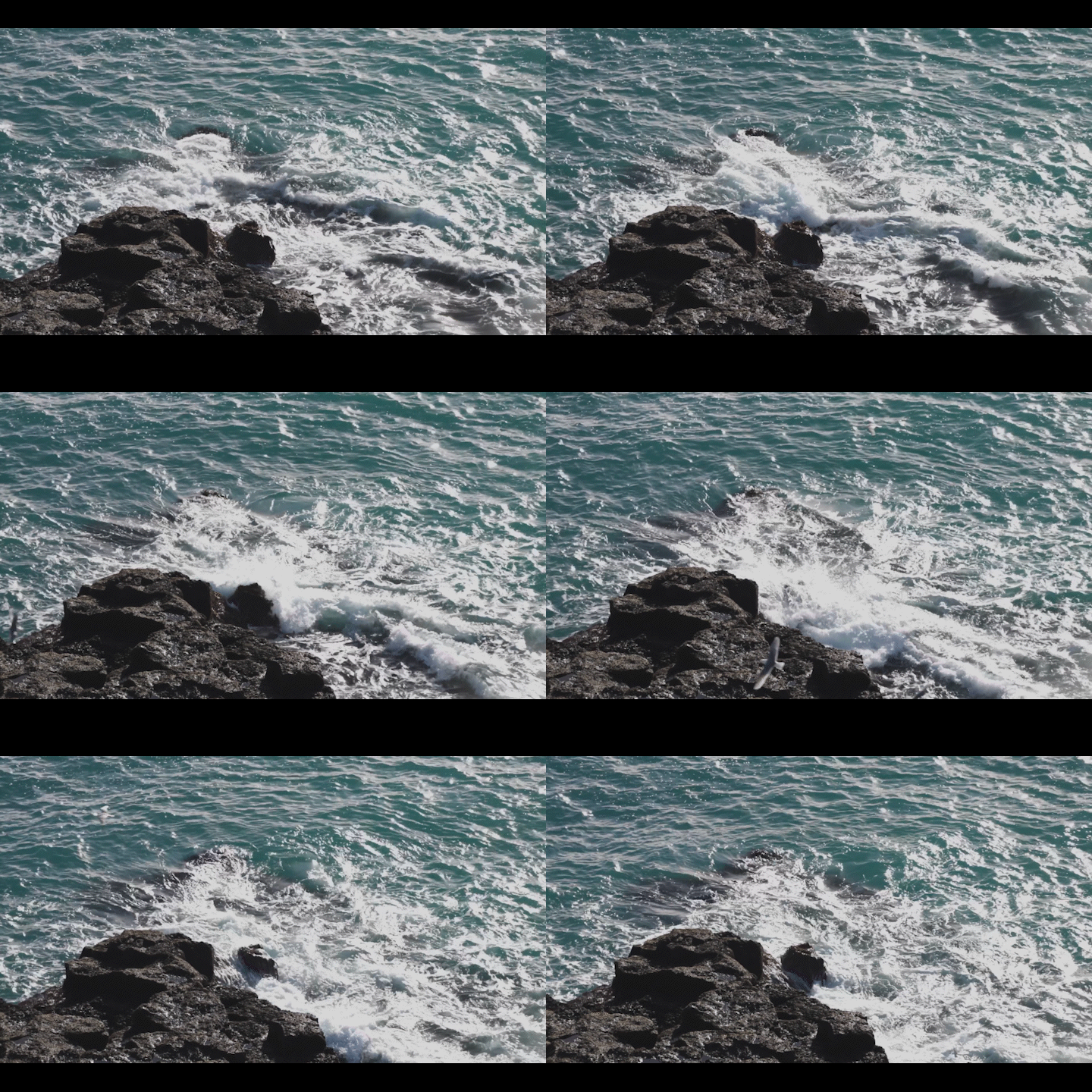
Perception as Construction
The cat’s world is not presented as a fixed reality but as something assembled from fragments. How the player edits clips determines how meaning is formed.
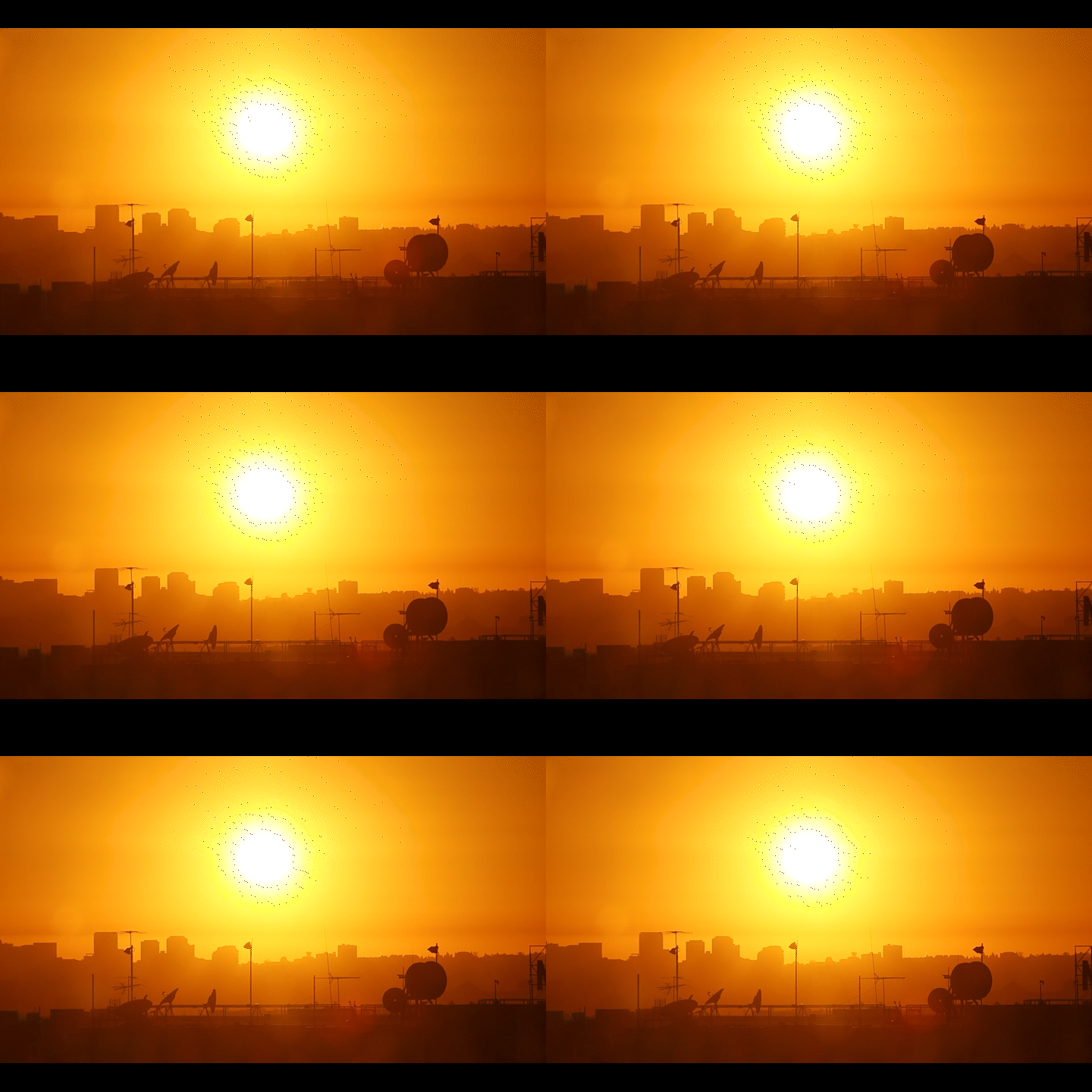
Renewal Through Reassembly
The cat’s repetitive day can be renewed not by changing the physical environment, but by reorganizing how the day is structured through montage.
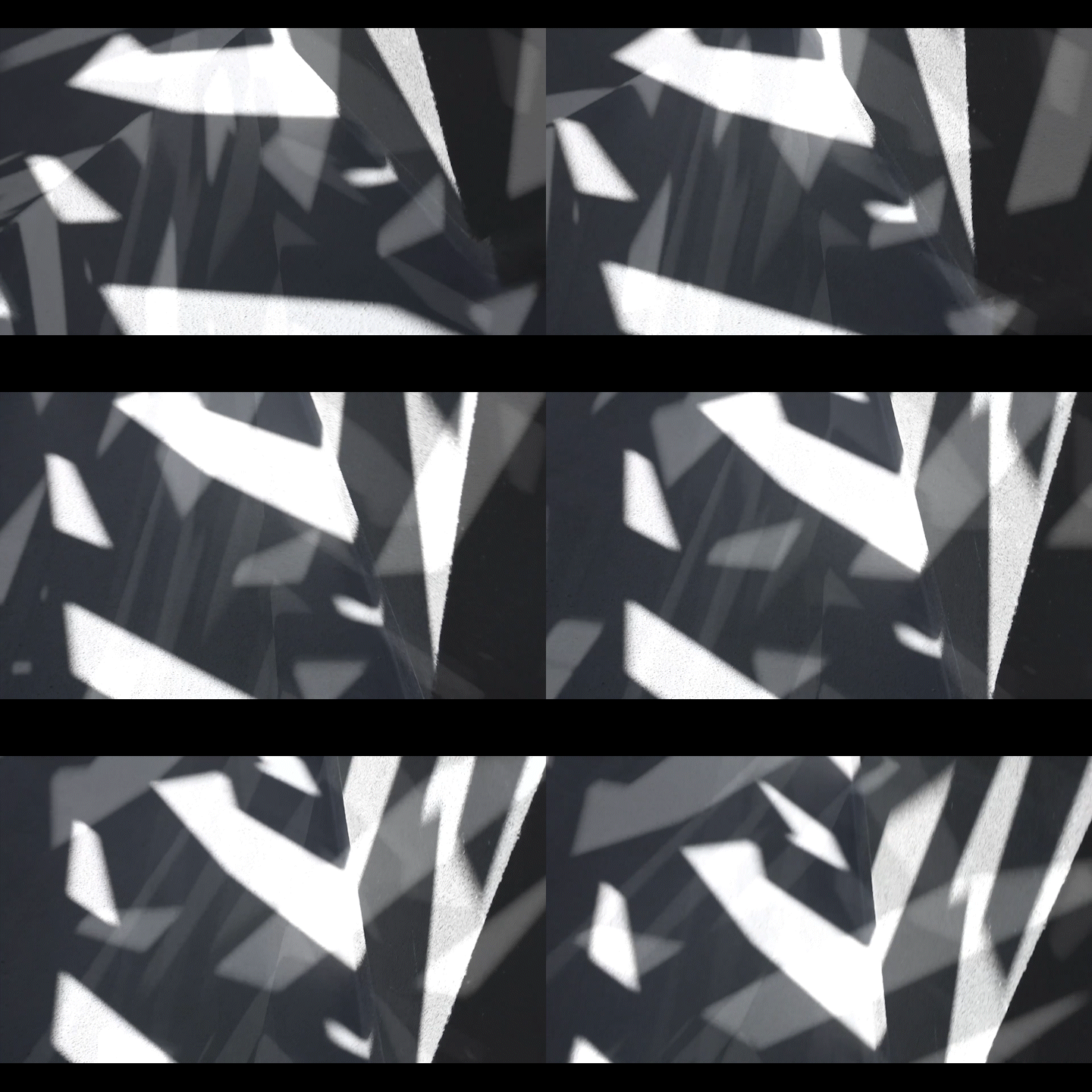
Extraordinary in the Ordinary
Seemingly ordinary routines gain new emotional resonance when juxtaposed with vivid impressions from the outside world.
Narrative Focus
Prologue: Cat’s Daily Life
Introduces the cat’s confined perceptual world and establishes its monotonous routine, revealing how monotony compresses perception and limits emotional awareness. It anchors the player in stillness so that the shift toward exploration and montage reconstruction becomes meaningful.
Outside Exploration Phase
This level expands the cat’s perception by introducing vivid outdoor fragments that break its monotony, which shifts the emotional tone from stillness to curiosity.
Montage Assembly Phase
It portrays how meaning is created through reordering experience. The narrative emphasizes that reality is interpreted rather than received, setting the foundation for how the final sequence reflects the player’s understanding.
Endings: Life Renewal
The ending presents the renewed version of the cat’s day shaped by the montage the player constructed. It concludes the emotional arc by showing how reorganized fragments transform the cat’s perception and complete the shift from confinement to expanded awareness.

Film Production
The game begins in black and white film, presenting the cat’s routine life as muted and monotonous. As the cat encounters outside world, color gradually enters the frame, introducing fluidity and emotional contrast. Through montage assembly, these colorful impressions merge with the original routine, rendering a renewed, colorized version of the day shaped by how the player edits it.
1. Film Concept & Storyboard

Prologue: This opening sets the initial pace of the narrative as slow, repetitive and visually limited via black-and-white short video. It focuses on minimal movements. which creates a quiet, flat and compressed tone.

Exploration Phase: This level unfolds as a quiet observational sequence. Each live-action clip appears as a sensory fragment, mirroring the way the cat perceives its environment: partial, vivid, and suggestive. The filmic progression gradually pulls the cat out of monotony and into curiosity.

Endings:
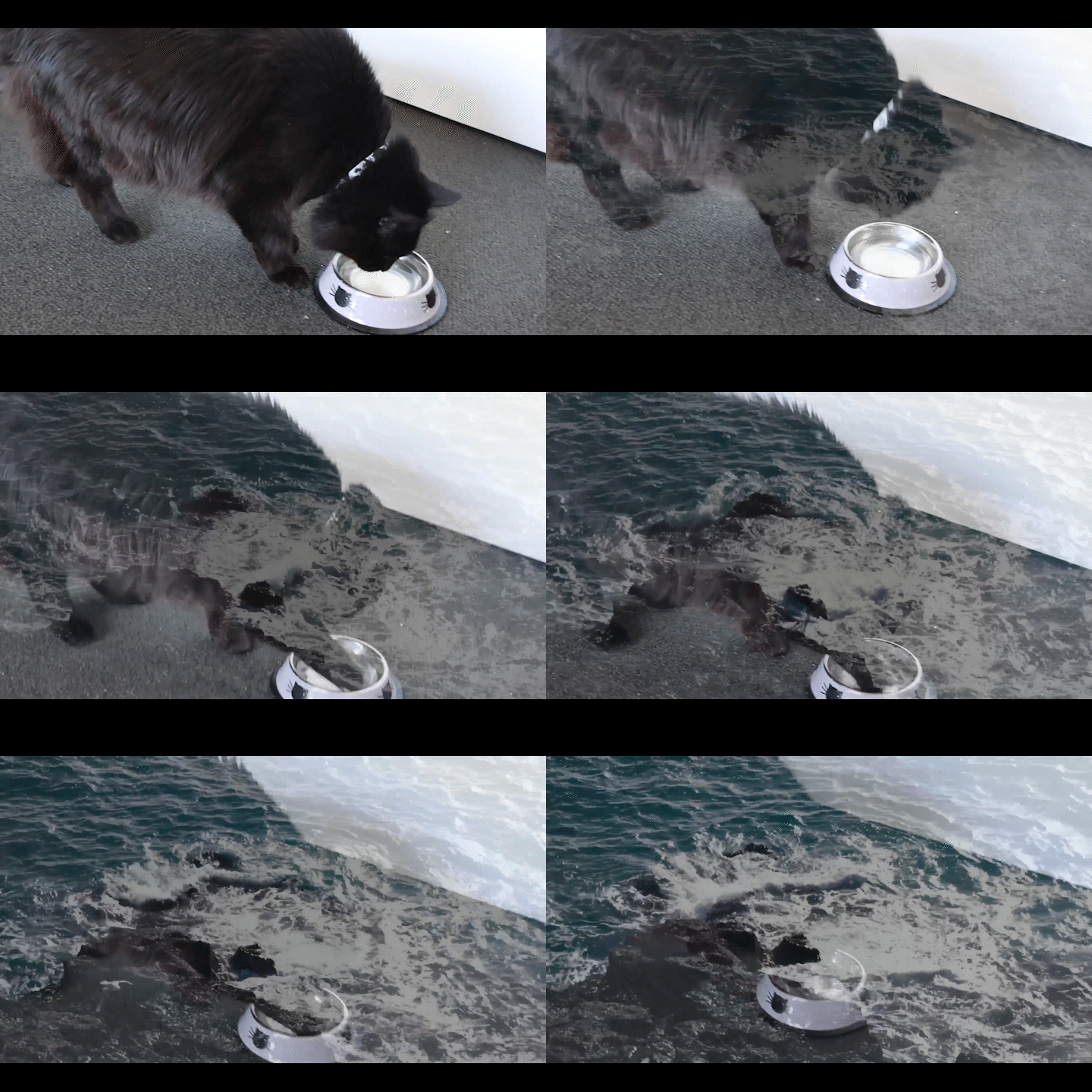
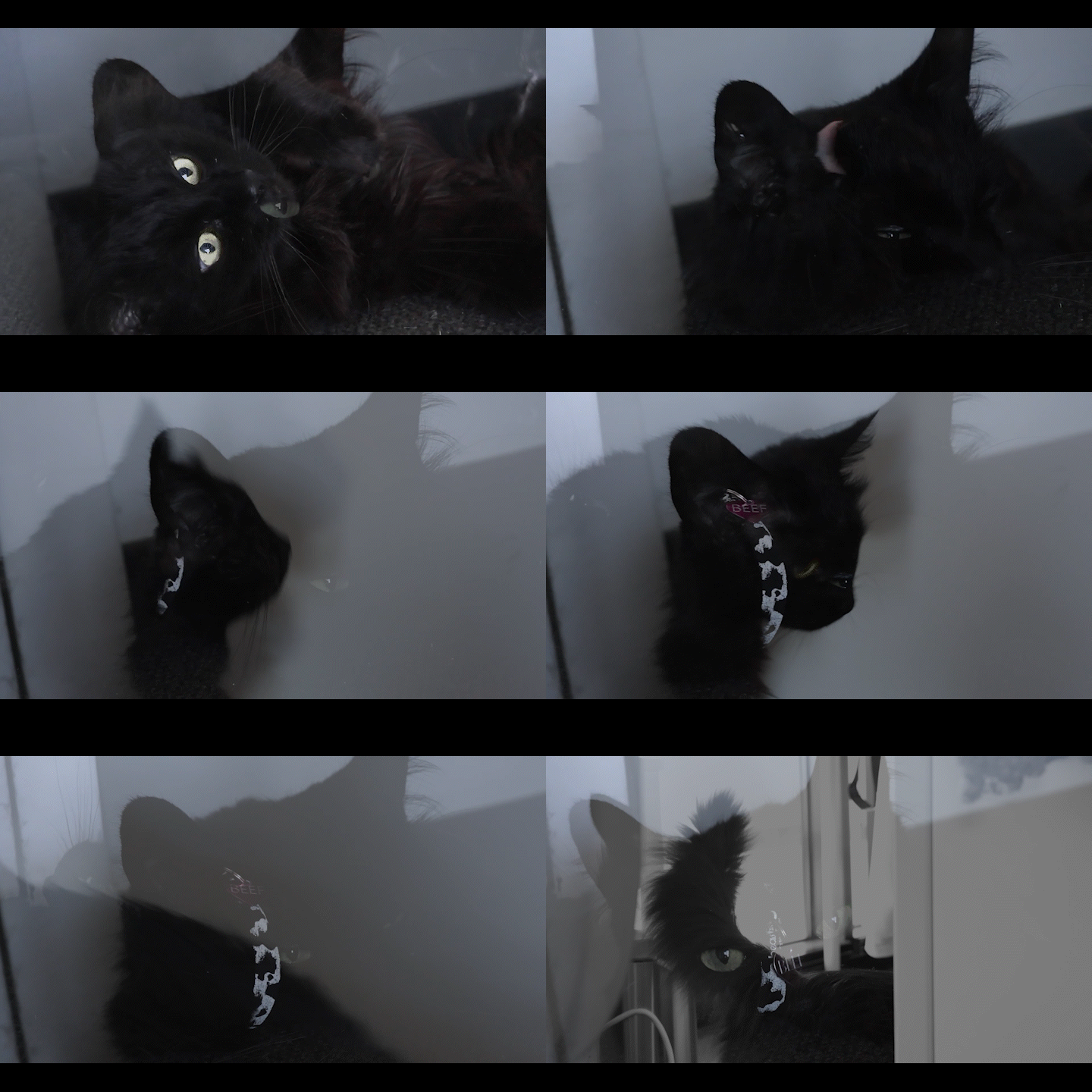
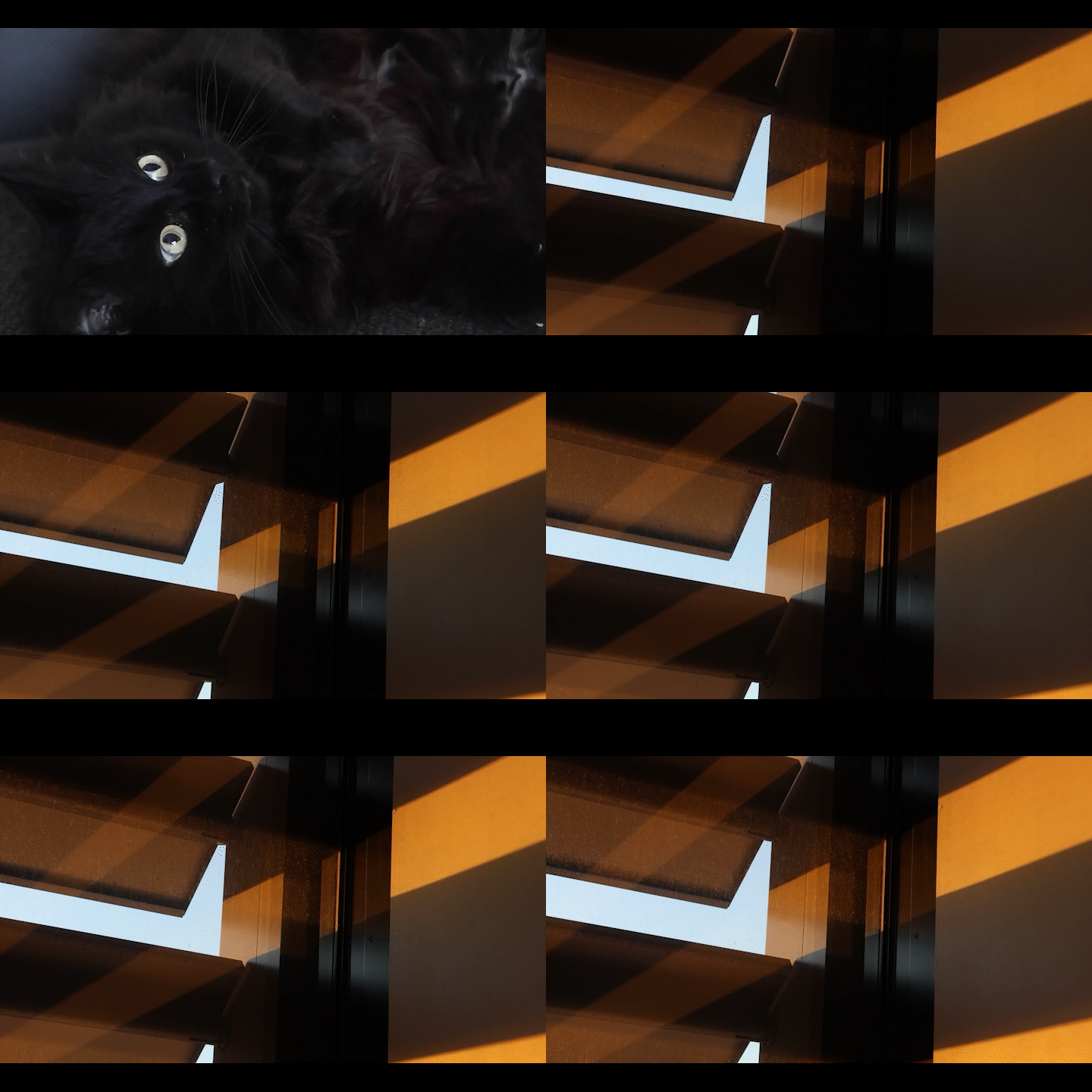
Each montage sequence is built from a three-part structure: A (routine clip) × B (external impression) × C (change in perception). By combining familiar actions with unfamiliar stimuli, players construct new emotional meanings.
2. On-set Filming
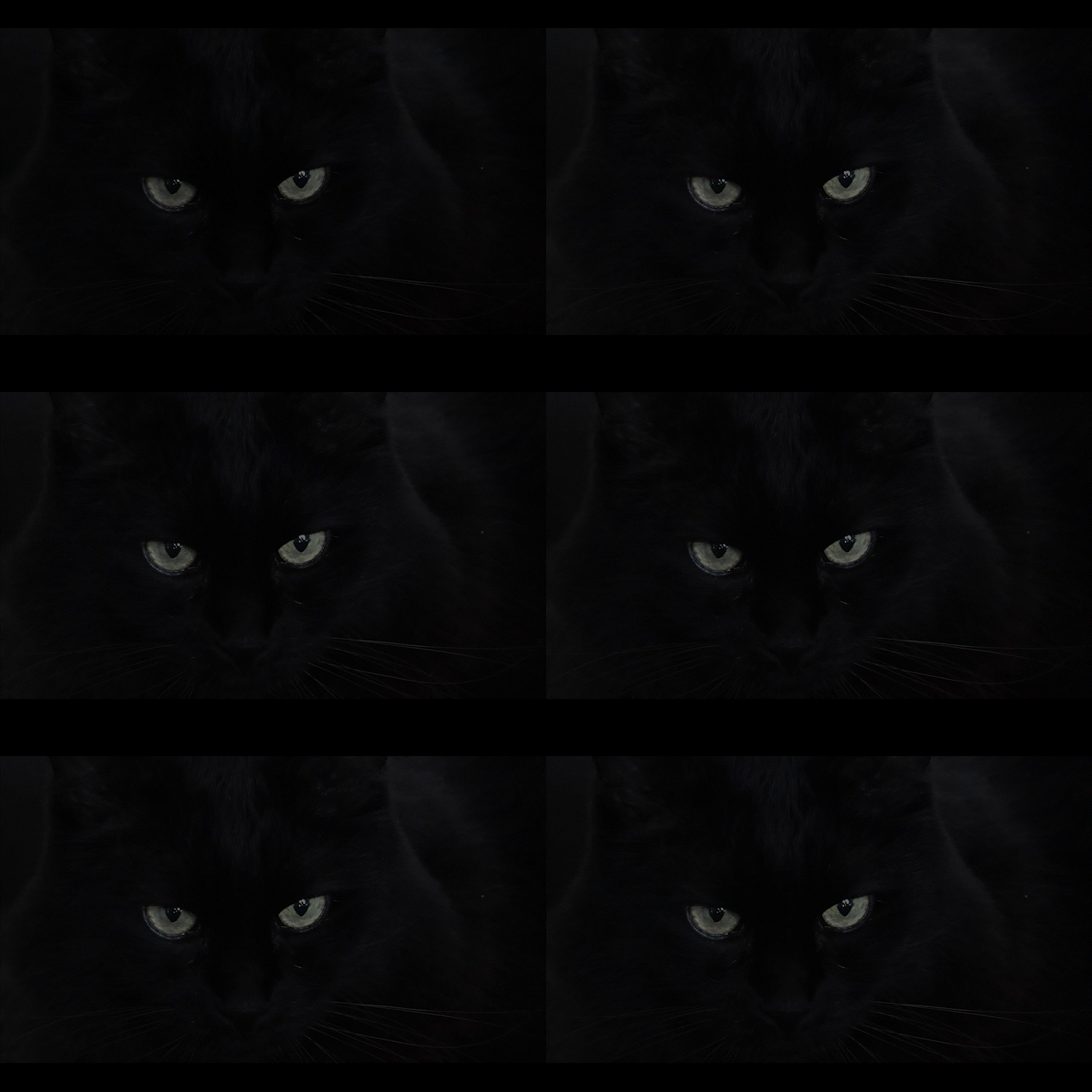
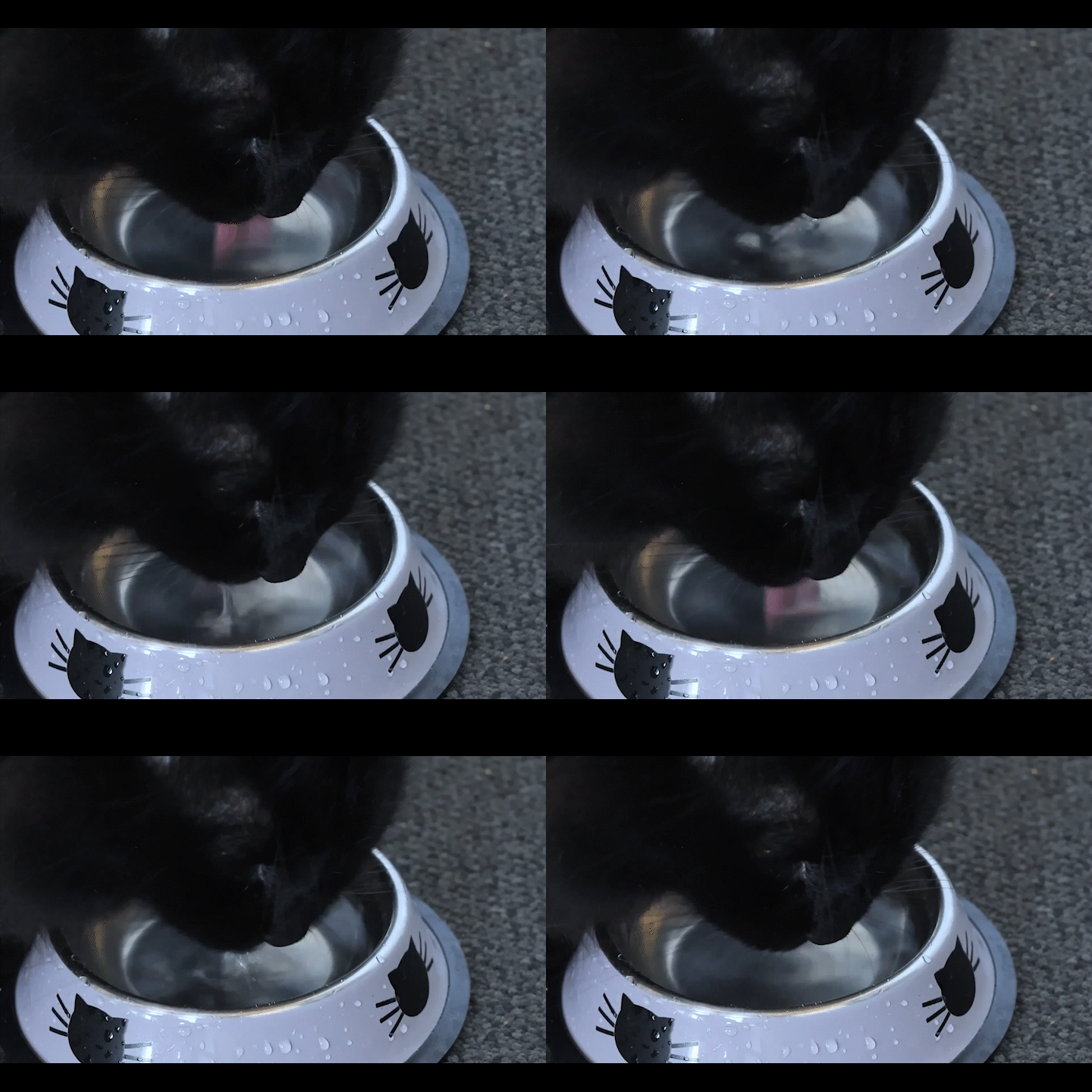
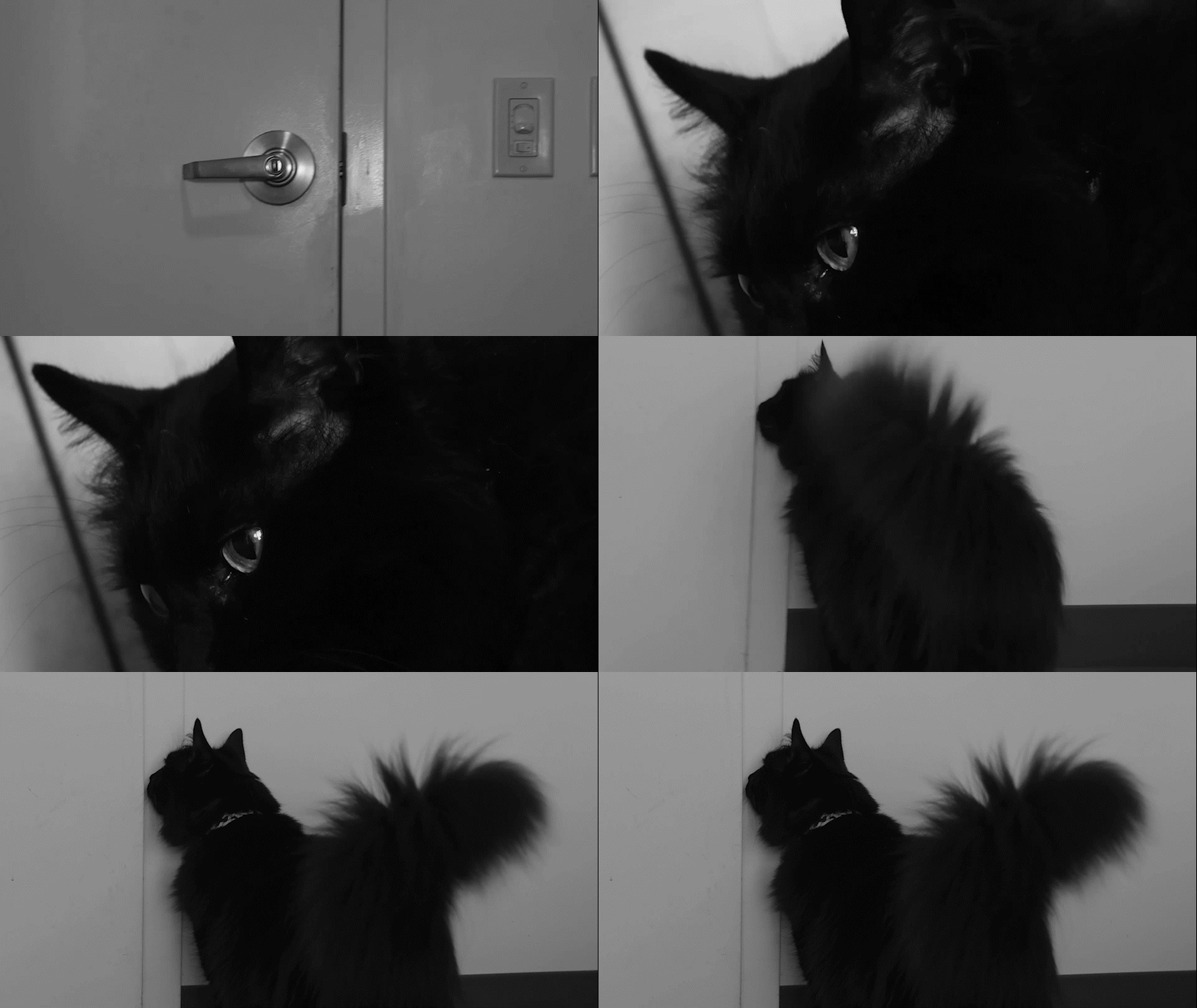
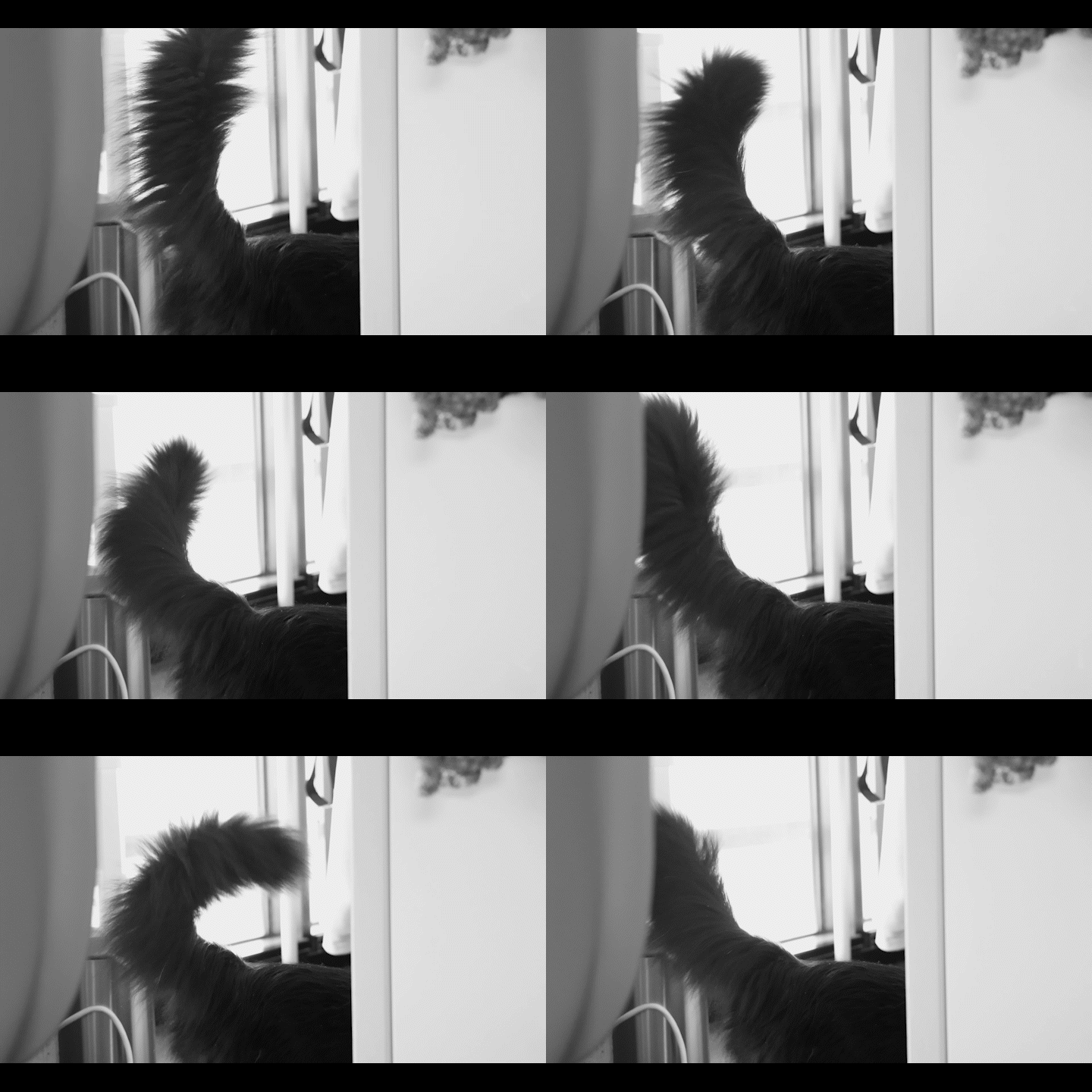
Prologue: The cat moves through a narrow domestic space where every action feels suspended in routine.: drinking water, walking across the hallway, sitting by the window. The monotony establishes the baseline: a life that runs on autopilot, waiting for something to break through.
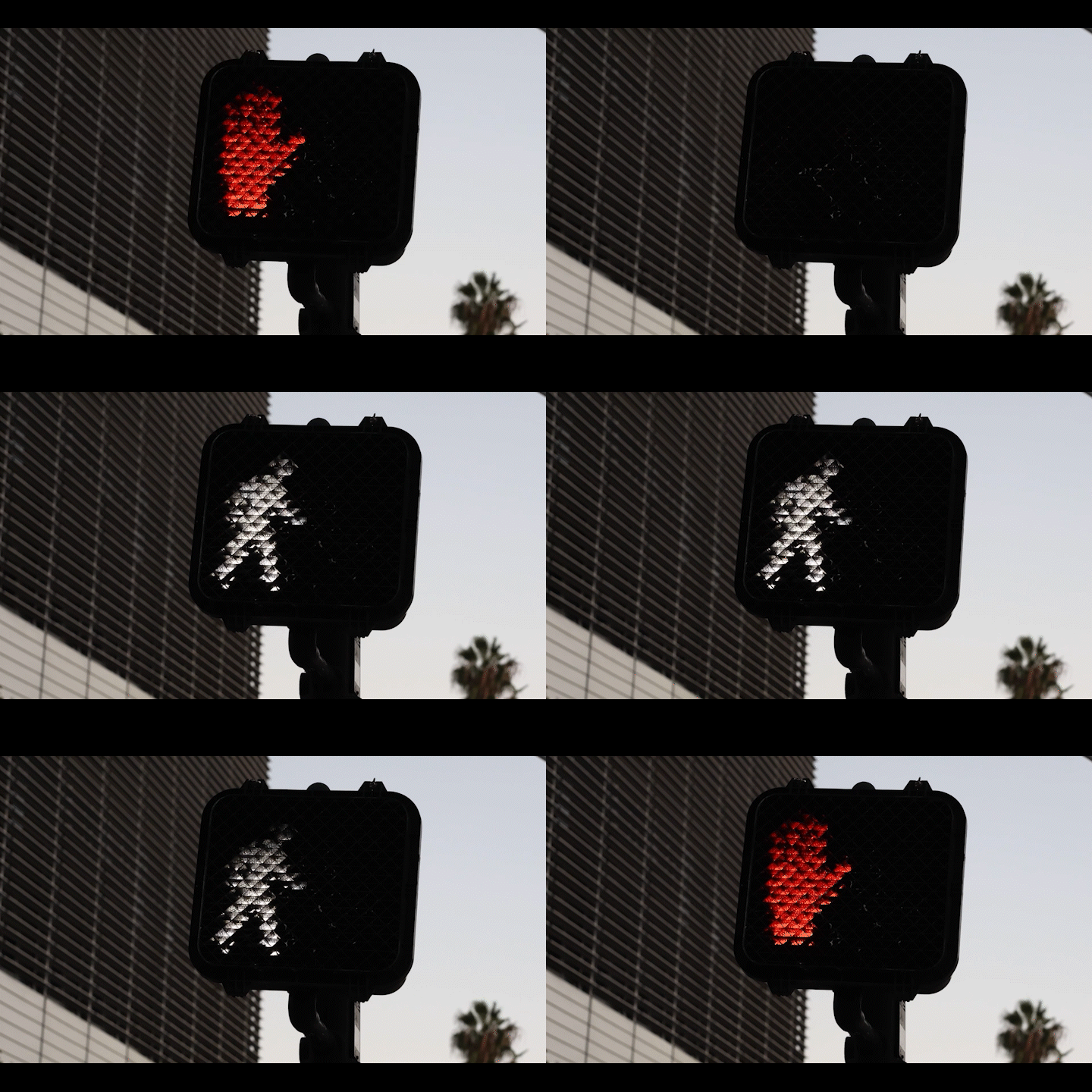
Exploration: Subtle intrusions of the outside world creep into the cat’s perception: a flicker of sunlight, the distant hum of an airplane, a shadow that shifts before the cat moves. These are filmed as short, sensory clips that contrast with the stillness of the monotone world.

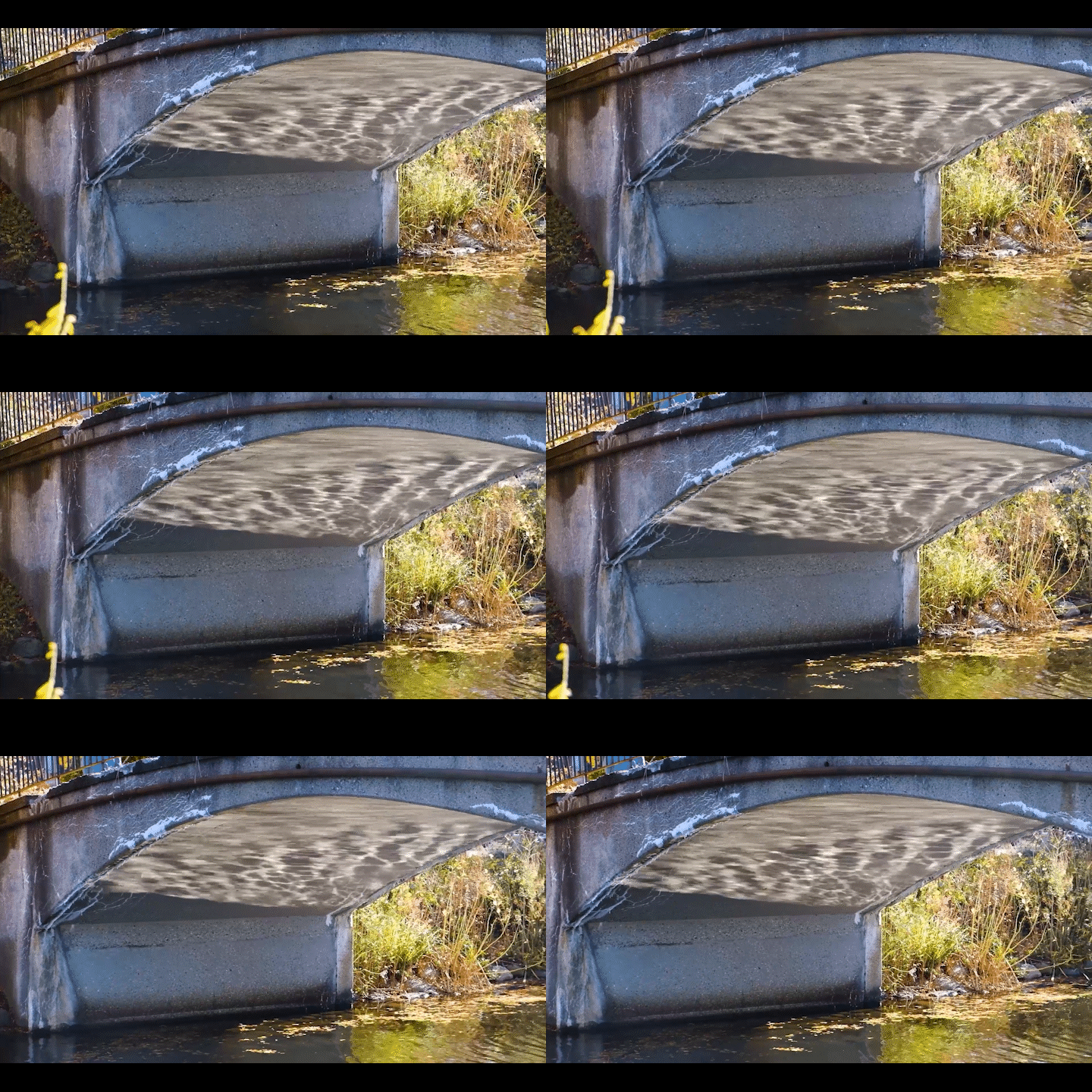
Ending: The palette bursts into color as the cat begins to follow these fragments. Camera movement becomes more fluid. The cat’s movements become more curious and intentional, marking the transition from passive existence to active exploration..

Level Design
Exploration Phase
Objective: Navigate the environment to gather film clips using different interaction methods.
Progression: Moderate-high complexity, 7 video clips with three collecting ways. Players must observe, react, and align timing/space to retrieve all fragments.

Montage Assembly Phase
Objective: Use shape-matching montage UI to reorder clips and generate an emotionally transformed sequence via “editing the day”.
Progression: Moderate complexity. 7 timeline slots with fixed shapes. Player selects 7 out of 13 clips, arranging them to activate one of several montage-based ending states.

-
original0 → collectable6 → collectable 4 → original3 → collectable0 → original2 → original5
-
original0 → collectable6 → collectable 4 → original3 → collectable2 → original4 → original5
-
original0 → collectable5 → original3 → collectable0 → original2 → original5 → collectable2
-
original0 → collectable5 → original3 → collectable2 → original4 → original5 → collectable2
-
original0 → collectable3 → original3 → collectable2 → original4 → original5 → collectable2
-
original0 → collectable3 → original3 → collectable2 →original2 → original5 → collectable2

Design Process
As a filmmaker, I am drawn to how editing shapes feeling. As a designer, I wanted to turn that language into play. Cuts Between the Day grows from this impulse. It lets players experience montage through interaction, not by changing the world but by seeing it differently.
The story follows a small cat moving through quiet routines, noticing light, wind, and small motions. These moments seem simple, yet when players arrange them, they reveal something emotional. In this process, perception becomes authorship.
By weaving film and game design, Cuts Between the Day creates a narrative that emerges not from plot events but from the way familiar moments are reorganized.
Why This Game
Initial Concept and Game Design: Drawing from my film background, I explored how ordinary footage gains new meaning through montage. I designed a two-part structure—collection and assembly—that mirrors noticing, interpreting, and reconstructing. All interactions and storyboards center on the idea that perception is a form of construction.
Prototype: Built a playable prototype testing three collection mechanics (camera match, follow, jump) and the montage timeline. Early versions focused on rhythm, contrast, and meaning through spatial placement.
Film Production: Led a four-person crew and executed a one-week shoot. Captured symbolic sensory details such as leaves, shadows, and waves to serve as narrative material.
Art and UI Design: Created a minimalist montage interface using simple shapes and visual cues to support poetic recombination and guide player experimentation.
Programming Refinement: Implemented systems for clip collection, shape-locked slots, and dynamic endings. Prioritized clean transitions and responsive feedback.
Playtesting and Iteration: Ran multiple tests to sharpen pacing, clarity, and emotional payoff. Improved feedback, adjusted slot difficulty, and expanded ending variations based on A×B×C combinations.